Asset Class: Closed Malls
Closed Malls: Big Footprints, Real Power, Ready for Compute
A closed mall doesn't look like a data center site — until you look at what actually matters. These properties were built to draw serious electrical load across hundreds of thousands of square feet, sit on enormous paved parcels with highway access, and are already zoned and entitled for intensive commercial use. For AI infrastructure, that combination is far more valuable than appearances suggest.
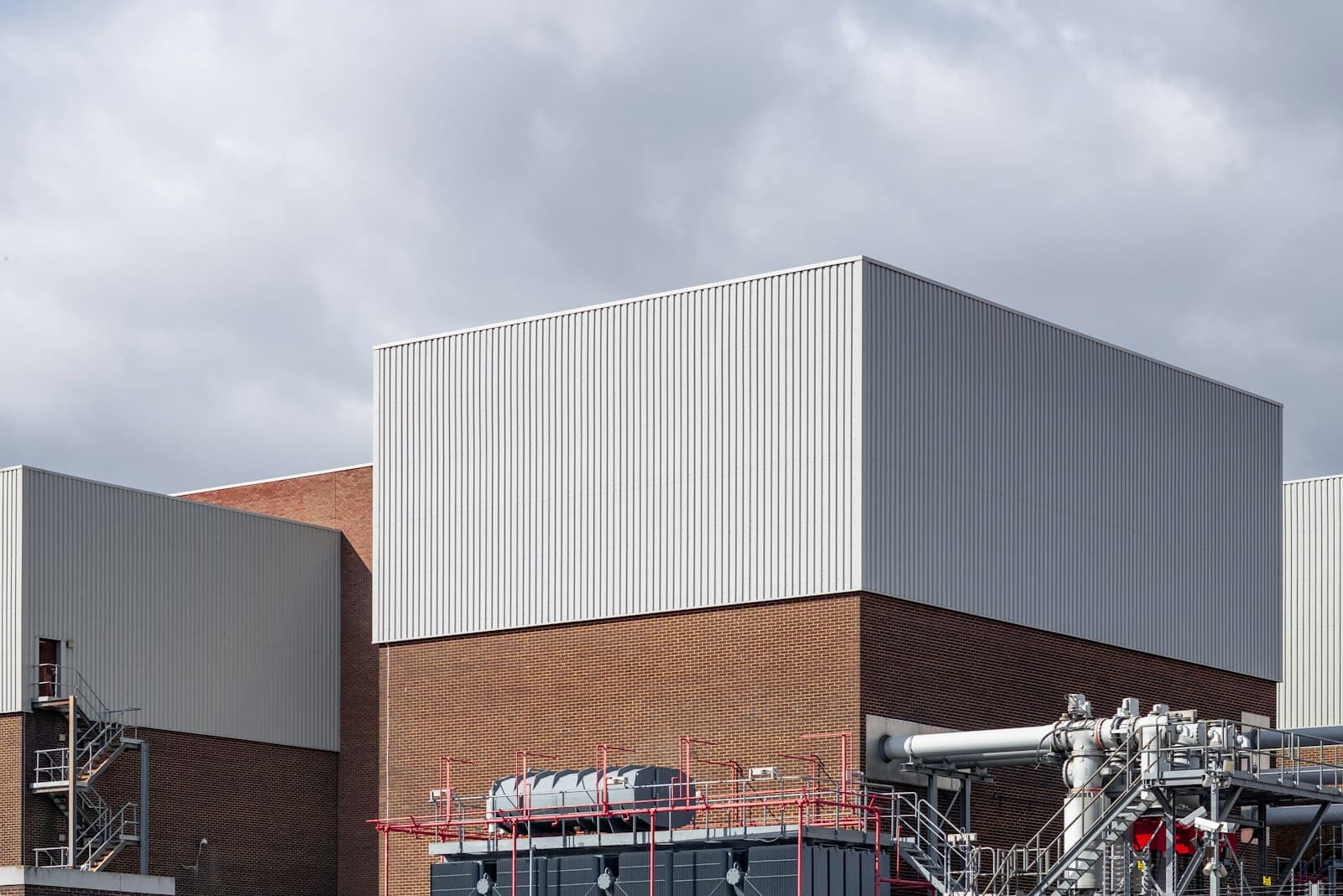
- Typical Footprint
- 500,000+ sq ft
- Site Size
- 50–100+ acres
- Power Service
- Multi-MW, expandable
- Access
- Highway-adjacent
Why malls work better than they look
Enclosed malls were engineered as small cities: centralized HVAC plants, heavy electrical distribution across a massive footprint, backup generation for anchor tenants, and food-court-grade water and sewer capacity. That infrastructure was sized for thousands of daily occupants and dozens of high-draw retail operations running simultaneously — a load profile that, while different from compute, left behind genuinely substantial power service.
The building itself is the other half of the argument. A mall is essentially a giant clear-span box with high ceilings, loading docks, and service corridors already built in — structurally closer to a data hall shell than most people assume, and far easier to retrofit than a multi-story office building would be.
What the land brings
Beyond the building, mall parcels are some of the largest assembled commercial sites in suburban America — typically 50 to 100+ acres, almost entirely paved, with highway visibility and interchange access. That much contiguous, already-graded land near population centers (and the fiber that follows them) is increasingly hard to assemble from scratch.
For phased AI infrastructure builds, the parking fields are a genuine asset: room for substation expansion, staged construction, and future data hall additions without acquiring a single adjacent parcel.
What we help navigate
Mall deals have their own diligence profile. Ownership is often fragmented — a REIT or lender may hold the main parcel while anchor tenants own their own boxes outright — so establishing clean site control takes real work upfront. Many malls also carry legacy environmental items (asbestos in older construction, underground storage tanks from auto-service tenants) that are well-understood but need to be priced in.
Rezoning or conditional-use approval is usually part of the path, since most mall parcels are zoned commercial rather than industrial. Municipalities, however, are frequently motivated partners here — a contracted data center tenant replacing a dead mall is an easier political conversation than almost any alternative reuse.
Where the opportunity concentrates
The U.S. has seen hundreds of enclosed mall closures over the past decade as retail consolidated around e-commerce and surviving centers — leaving behind a large, well-documented inventory of vacant or deeply underused properties, particularly in secondary markets and inner-ring suburbs. Many are already listed with brokers or held by lenders after foreclosure, which means motivated sellers and realistic pricing.
The strongest candidates tend to be malls where the power infrastructure was most substantial — properties with multiple anchor tenants, large food courts, or attached entertainment venues drew the heaviest service — and where the surrounding grid has headroom for expansion.
What a realistic timeline looks like
Mall conversions move on two tracks: the real-estate track (assembling site control across parcels, rezoning) and the power track (evaluating existing service, planning the upgrade path with the utility). The power track is usually the faster and more predictable of the two — which is exactly why starting from a site with real existing service matters.
A mall with a single motivated owner and cooperative municipality can move quickly. One with fragmented anchor-tenant ownership will take longer on the real-estate side — we'll tell you which situation you're looking at before significant diligence spend.
What this means for owners
If you own, represent, or are marketing a closed or deeply underused mall, the power service and land assembly that made it a retail destination may be worth more as AI infrastructure than as any conventional reuse. Tell us about the site's location, ownership structure, and power position, and we'll evaluate it against real compute demand.